Rik Wouters
The work of the Belgian sculptor and painter Rik Wouters (1882–1916) demonstrates an uncommon vitality. He displayed a prodigious activity over a career spanning less than ten years. At the age of twelve, Rik Wouters was compelled by his father to learn woodcarving. However, his interest soon turned toward drawing, and he entered the Royal Academy of Fine Arts of Mechelen. Wouters later continued his studies at the Royal Academy of Fine Arts in Brussels, where he took life sculpture classes.
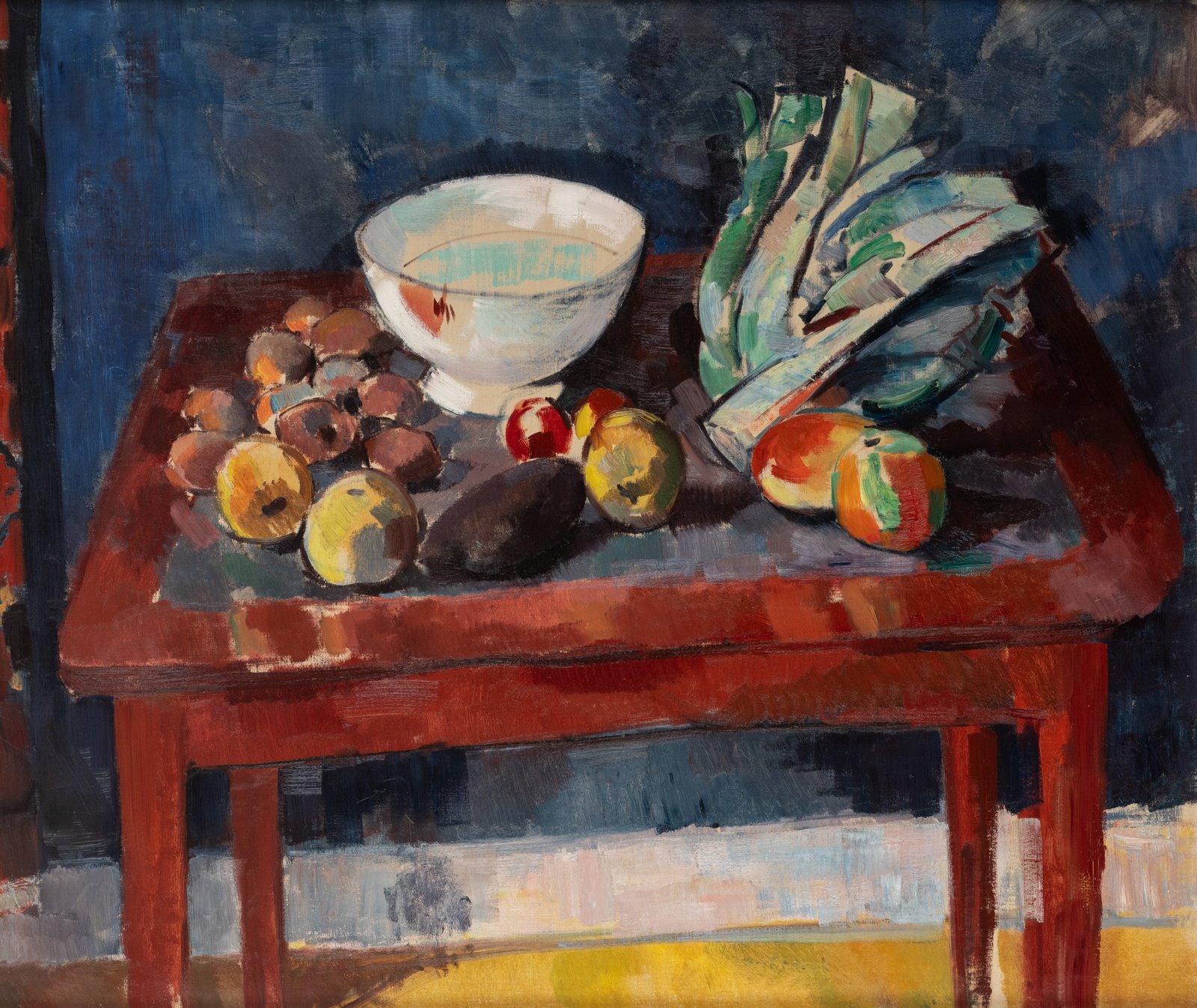
Wouters completed his training as a self-taught painter, profoundly inspired by James Ensor, whose bust he would later sculpt, and by Paul Cézanne. From the French artist, his true master of inspiration, he learned the study of color, used in its full intensity and confronted by form to preserve its purity.
In 1904, Wouters met the woman of his life and the muse of his artistic creation, Hélène Duerinckx, whom he nicknamed Nel. She became the central figure of most of his works — representing nearly three-quarters of his artistic production. Nel testified: “While I was sleeping, at my toilette, during my meals, Rik was there, pen in hand, like the vigilant sentinel of my life.”
After their marriage, they settled in Watermael, in the outskirts of Brussels. Living in miserable conditions, they were soon compelled to return to Wouters’ parental home in Mechelen. Nel became the family’s servant, and Rik was unable to fully pursue his ambitions. The couple, however, preferred to live freely, even in poverty. They later found a studio in Sint-Josse-ten-Noode (Brussels), but Nel fell ill, and they once again had to leave the city and go to Boitsfort.
In 1912, Rik Wouters joined the opening exhibition of the brand-new Galerie Georges Giroux in Brussels, with no fewer than thirteen sculptures, six paintings, and several drawings. The dealer also financially supported many other young artists, including Willem Paerels, Ferdinand Schirren, and Anne-Pierre De Kat, offering them contracts and organizing exhibitions at the gallery. Wouters’ strong and charismatic personality soon established him as the natural leader of the Brabantine painters. The professional and personal connection between the gallerist and Wouters is also illustrated by the Portrait de Madame Giroux (1912), now part of the collection of the Groeningemuseum in Bruges.
In 1914, Wouters was invited by Octave Maus to the salon of La Libre Esthétique, where a few years earlier a show had featured Henri Matisse and other Fauvist artists. While Parisian Fauvism clearly left its mark on Wouters’ work, Matisse’s influence remained more indirect.
When the First World War broke out in 1914, Rik Wouters held his first solo exhibition at the Galerie Giroux, but early symptoms of a serious illness began to appear. In 1915 he was reunited with his wife Nel in Amsterdam. Shortly before his death, a major overview of his work was held at the Stedelijk Museum in Amsterdam. There, as the fibrosarcoma of his jaw progressed, his paintings adopted a darker tone, exemplified by Autoportrait au bandeau noir, now part of the collection of the Royal Museum of Fine Arts, Antwerp. He died on 11 July 1916.