Paul Delvaux
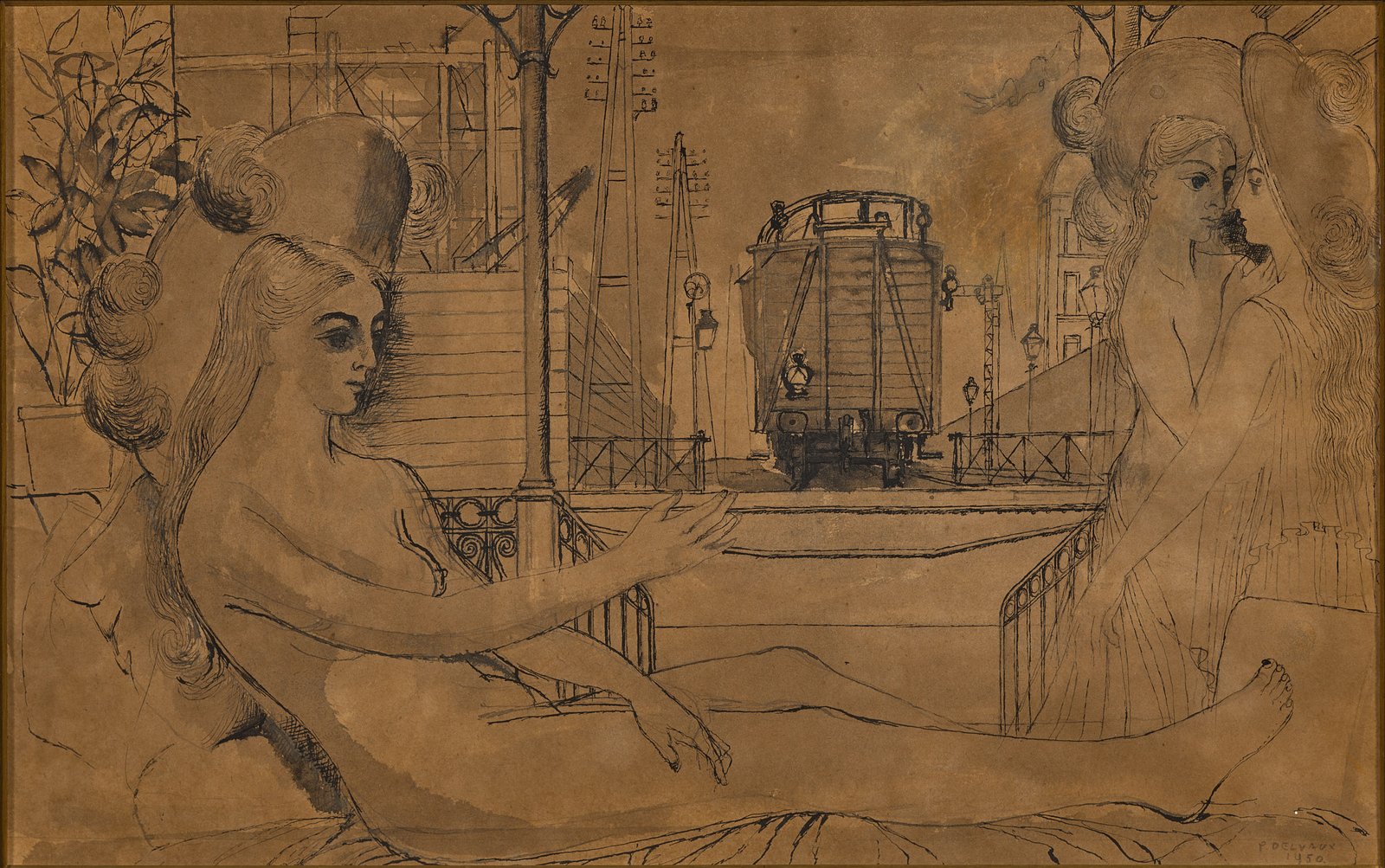
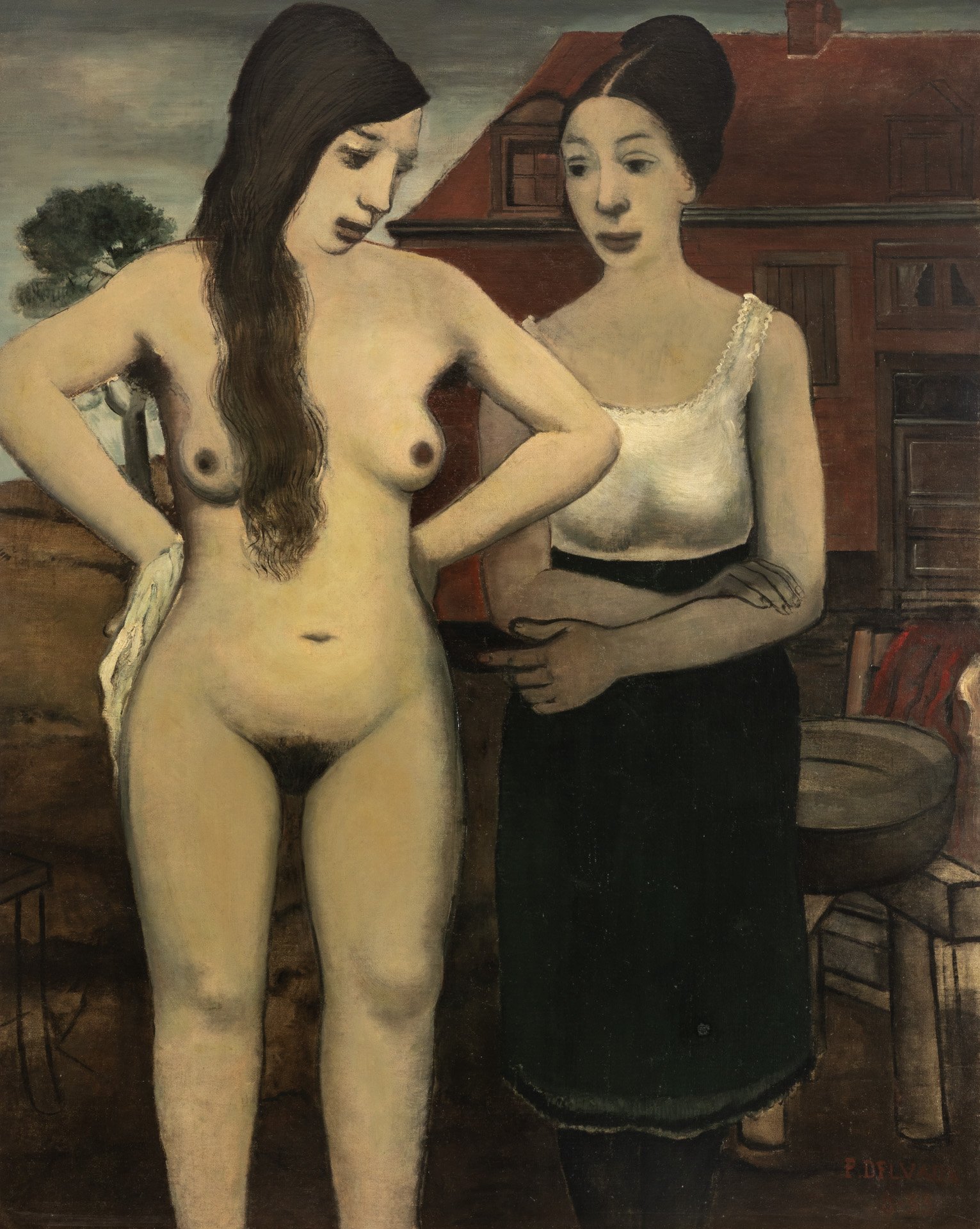
The beginnings of Paul Delvaux’s artistic journey were marked by numerous explorations that would ultimately lead him to the recurring motifs that, from one painting to the next, create a continuous pictorial conversation: antiquity, death, women, trains, and the world of Jules Verne.
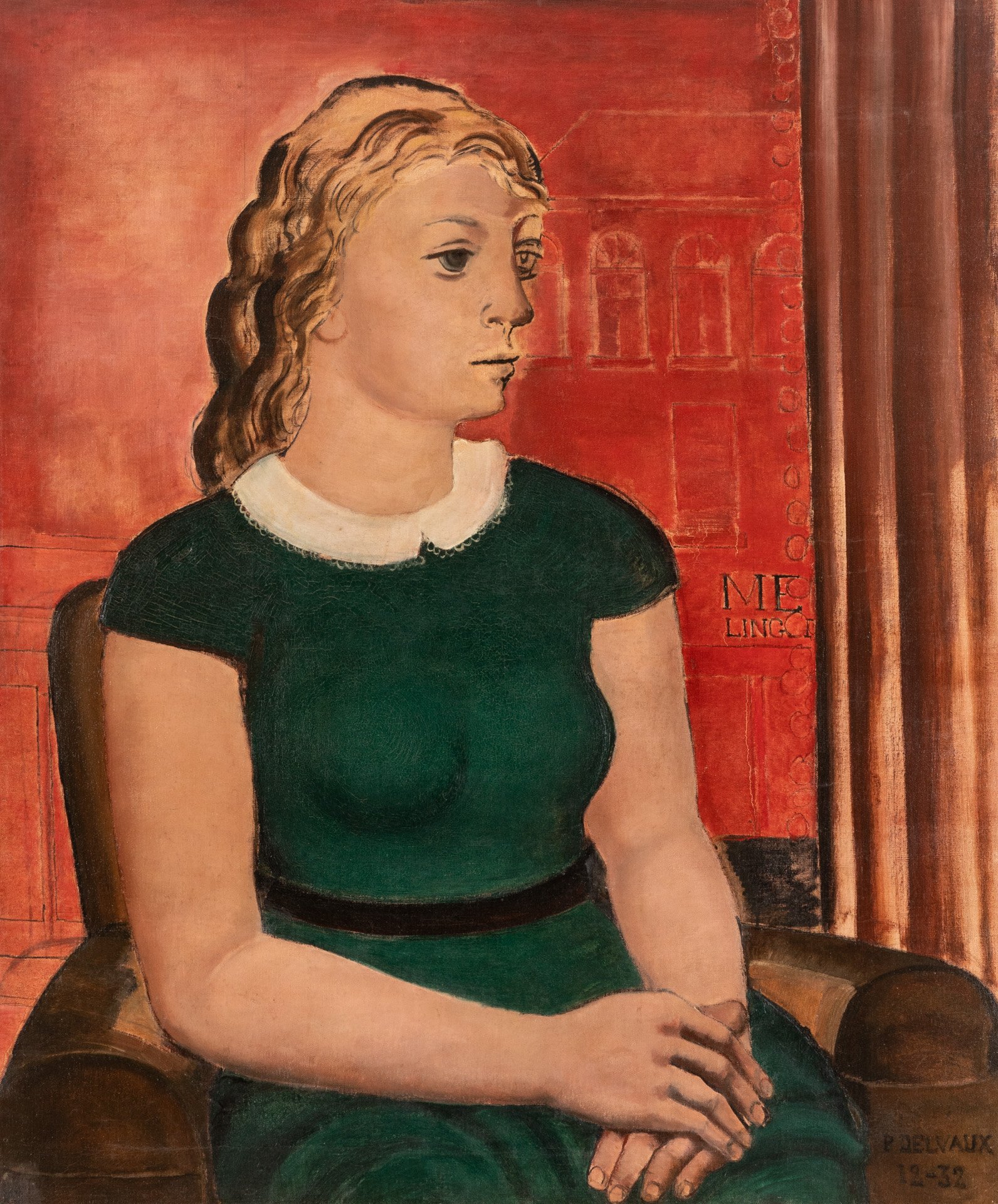
After a brief period at the Royal Academy of Fine Arts in Brussels, Delvaux began painting from life, outdoors, driven by a desire to capture the immediacy of light. Although solitary in his creative process, he was also shaped and inspired by both his predecessors and his contemporaries. Toward the end of the 1920s, he discovered the Expressionists who distorted reality to convey emotions such as anxiety, solitude, or melancholy. Delvaux admired the painter Gustave De Smet — whom he met and whose paintings he owned — as well as Constant Permeke, whose direct vision of nature left a lasting impression on him. During this same period, Delvaux developed a close relationship with Claude Spaak, the Belgian playwright, poet, and collector who attempted, though unsuccessfully, to introduce him to the work of René Magritte.
In the early 1930s, the main center of artistic life and avant-garde activity in Brussels shifted to the Palais des Beaux-Arts, where Claude Spaak, then responsible for programming, frequently invited his friend Delvaux to exhibit. E.L.T. Mesens, the great promoter of Surrealism and a close friend of Magritte, worked there as well and would later emerge as an important figure in Delvaux’s artistic career.
This period proved pivotal for the artist, at a time when he was far from satisfied with his work and openly acknowledged his own lack of originality. Delvaux’s journey toward Surrealism reached a decisive moment in 1934, when he visited the exhibition organized by the periodical Minotaure at the Palais des Beaux-Arts. There he encountered the work of Giorgio de Chirico: “The empty cities, the silent figures of De Chirico impressed me because I found in them a correspondence with something that was within me… It is an entire poetic program.”
Though he was never a formal member of the Surrealist group, Delvaux’s work resonated deeply with the movement’s ideals. His paintings evoke a dream state more lyrical than irrational, often depicting timeless, theatrical scenes that feel suspended between past and present.
Delvaux continued to explore these themes throughout his long career, often returning to motifs like skeletons, nocturnal settings, and neoclassical architecture. His approach, while emotionally detached on the surface, reveals a deep engagement with memory, desire, and existential wonder. In addition to painting, he created murals, book illustrations, and stage designs, expanding his artistic vision across various media.